The Historical Development of Free Spin Promotions in Finland's Online Casino Industry
Kirjoittanut Ulrich Koch · 26.10.2026
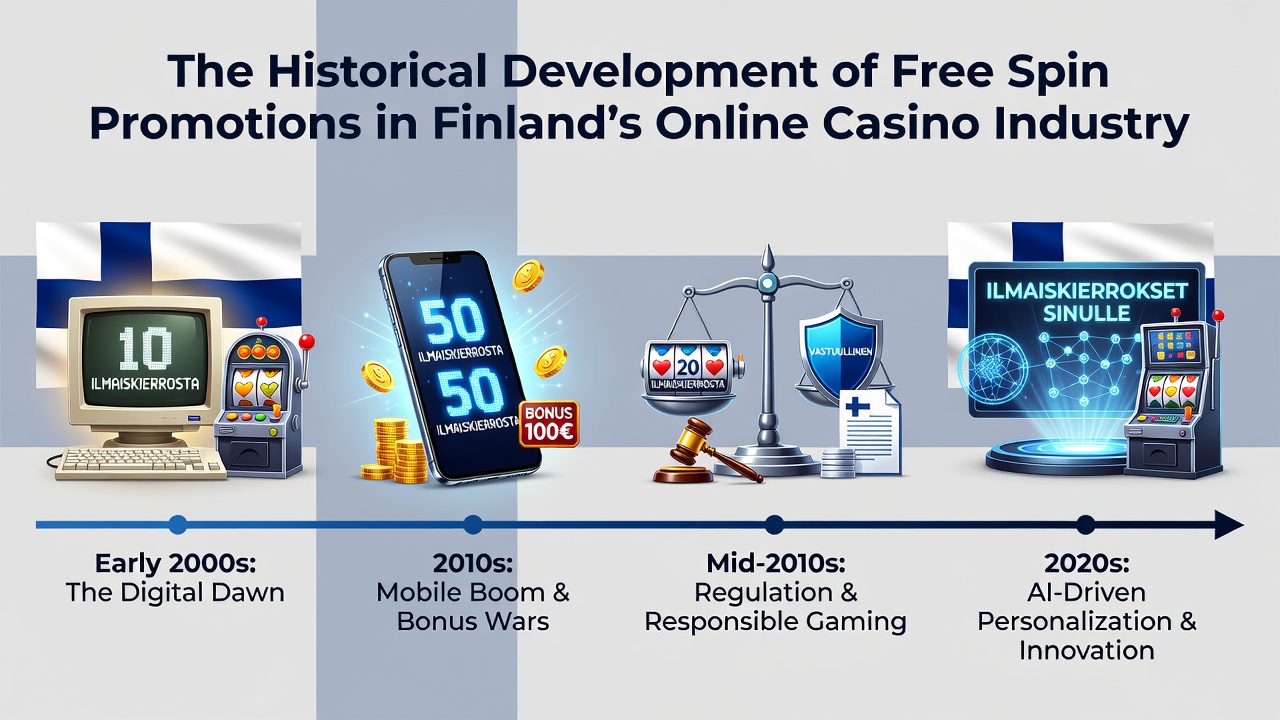
The Historical Development of Free Spin Promotions in Finland's Online Casino Industry
Free spin promotions entered Finland's online casino landscape during the late 1990s as international operators began targeting Nordic markets with internet-based slot games, and operators introduced these offers to attract players who preferred digital access over land-based venues. Data from early industry reports shows that initial campaigns featured limited numbers of spins on basic slot titles, often tied to first deposits or simple registration steps.
Early Adoption Phase in the 2000s
Operators expanded free spin mechanics after 2005 when broadband penetration rose across Finland, and platforms adapted promotions to include themed slots that appealed to local preferences for straightforward gameplay. Researchers at Nordic gaming studies documented how these incentives helped operators build player databases while complying with emerging EU directives on consumer protection, and figures from that period reveal steady growth in registered accounts linked to promotional credits.
Payment methods such as bank transfers and early e-wallets supported these offers, whereas credit card restrictions in some jurisdictions prompted operators to refine eligibility rules around free spins. Observers note that Finnish players responded positively to promotions that required minimal wagering before withdrawal, which encouraged repeat engagement without immediate financial commitment.
Regulatory Shifts and Market Adjustments After 2010
Finland maintained its state monopoly through Veikkaus while international sites continued serving Finnish users, and free spin promotions evolved to include bonus rounds on progressive jackpot games by 2012. Industry data indicates that operators adjusted terms following updates to the Lotteries Act, which emphasized clearer disclosure of playthrough requirements and expiration dates on promotional spins.
One study from a Finnish academic institution highlighted how layered incentive structures, including free spins combined with deposit matches, increased session durations during this era. Yet regulatory pressure from the Ministry of the Interior led many platforms to standardize bonus conditions across Nordic audiences, and operators responded by offering region-specific spin packages that aligned with local currency and language settings.
Digital Expansion and Mobile Integration in the 2020s
Mobile applications became central after 2018 when smartphone usage surged, and developers integrated free spin triggers directly into app interfaces to streamline user experiences. Reports from gambling research networks show that promotions shifted toward daily login rewards and achievement-based spins, reducing reliance on large upfront deposits.
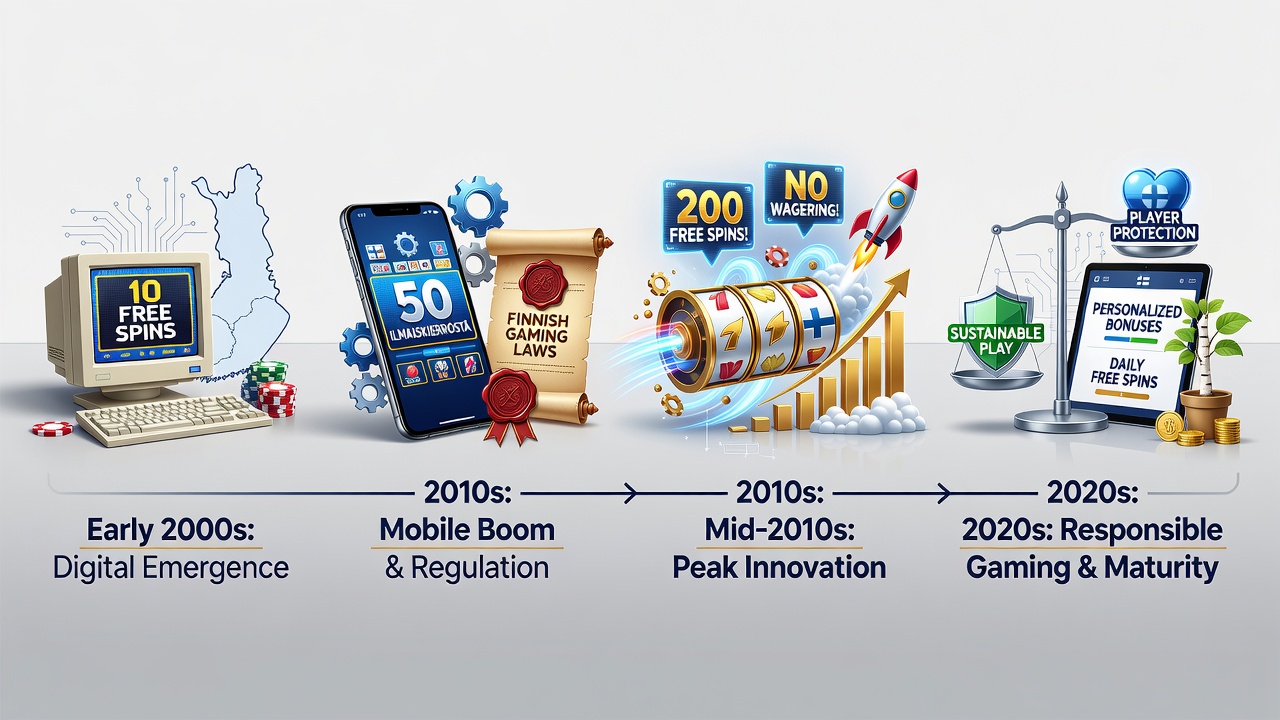
Payment gateways diversified with the addition of instant bank transfers and cryptocurrency options, which in turn affected how operators calculated spin eligibility across different account types. Data indicates that platforms offering flexible deposit methods saw higher redemption rates for free spin bonuses compared to those limited to traditional cards.
Developments Leading Into October 2026
By October 2026, operators had incorporated artificial intelligence tools to personalize free spin allocations based on individual play patterns, and regulatory bodies continued monitoring these systems for compliance with transparency standards. External analyses from European research consortia link these advancements to sustained player retention metrics in the Finnish market, while operators balanced promotional creativity with updated consumer safeguards.
Case examples from industry reports describe how certain platforms introduced cross-game spin transfers that allowed unused credits to move between titles without additional deposits, and this feature gained traction among users who valued flexibility. Finnish authorities tracked these trends through periodic market reviews that informed future policy adjustments.
Conclusion
The trajectory of free spin promotions in Finland reflects broader technological and regulatory changes that shaped online casino operations from the late 1990s onward. Evidence from multiple studies demonstrates consistent adaptation by operators to maintain compliance and engagement, and ongoing developments through 2026 suggest further refinements in personalization and accessibility. Those examining the sector can trace these patterns through available regulatory filings and academic publications that document the sector's evolution.